Top Posts



HARD LESSONS LEARNED: My Ten Greatest Fundraising Mistakes
“What were some of your greatest professional mistakes?” In every Thompson & Associates public engagement, online interview, or continuing education seminar, that is the most frequent question I am asked. Luckily, the most important lessons I’ve learned in my 40+...

FALSE ASSUMPTIONS: Even Long-time Pros Can, and Do, Make Consequential Mistakes
Grant Whitney joined Harvard University’s Faculty of Arts & Sciences and served there for over 20 years, leading the university’s largest planned gift recognition effort—responsible for enrolling more than 1,000 alumni and friends as new members of the John...
January and February 2024 is the Best Time in Years to Fund a Traditional Charitable Gift Annuity
A note from Eddie: I am privileged to have known Laura Hansen Dean for almost 40 years and consider her one of the best gift planners around. Even if you don’t know Laura personally, you have likely heard her speak or read something she wrote. She currently serves...

INTERGENERATIONAL WEALTH TRANSFER: Conflicting Values Across Generations
One of the paradoxes of life is that the traditional rewards of success—affluence, status, leisure time—quickly erode the values that created that success. Hard work, frugality, and long-term perspective usually lead to prosperity and eventually to wealth. But having...
Top Posts

CRISIS FUNDRAISING: The Growing Reliance on Emergency Funding
The story of Chicken Little originated as a European folk tale that had been told for centuries in various ways with varying moral applications. The best-known version concerns a chick hit on the head by a falling acorn. The chick sets off on a journey to inform the...
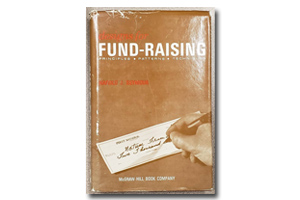
SI SEYMOUR’S LEGACY (Part Two): Why Design for Fundraising Had a Career-changing Impact on Me
As a rookie fundraiser at a small liberal arts college, Si Seymour’s 1966 book, Design for Fundraising, had an extraordinary impact on me, so much so that it has been the primary inspiration throughout my 45-year career. Every page of Seymour’s little book resonated...
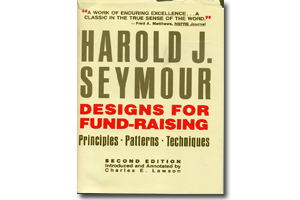
SI SEYMOUR’S LEGACY (Part One): Principles of Fundraising and Donor Relationships
Almost all worthwhile advice about fundraising can be traced back to one ground-breaking publication: Harold (Si) Seymour’s Designs for Fundraising: Principles, Patterns, and Techniques. First published in 1966, this book continues to be regarded as the essential...

MOTIVATIONS AND EMOTIONS: Evaluating the Strength of Your Donor Relationships
A donor’s primary giving motivation can reveal the depth and strength of their relationship with the institution. In thousands of conversations about charitable estate planning, long-term values, and inheritance priorities, I’ve learned a few things about WHY people...

CAREER PROMOTIONS: Proving Your Worth to the Organization
Focusing on person-to-person donor relations is essential for long-term, sustainable fund development. However, many nonprofits are understaffed or lack basic infrastructure upgrades. Consequently, experienced fundraising professionals are often tasked with a host of...

MOMENTOUS MOMENTS: Unlocking Greater Fundraising Potential Through Memorial Gifts
Whenever I am helping donors plan their estates and discussing impactful events in their lives, I propose the idea of memorial gifts, which many people have never considered. Memorial gifts are a way for donors to benefit nonprofits while also honoring the legacies of...

TELL TO WIN: Finding the Right Story
In his #1 New York Times Bestseller, Tell to Win, award-winning movie producer Peter Gruber explains how dozens of presentations succeeded or failed based on connecting the right story with his presentation. Whenever he relied on facts, charts, and PowerPoint...

DONORS AS YOUR BEST CUSTOMERS: Cultivating Habits of Great Fundraisers
BOB GOLOMB is Sales Manager at the Flemington Nissan dealership in central New Jersey. Wearing his wire-rimmed spectacles and dark conservative suits, he looks more like an accountant than a car salesman. There’s nothing slick, flashy, or contemporary about Golomb....

MANAGING SYSTEMIC CHANGE: Baby Steps to a More Productive, More Effective Nonprofit
The world has changed radically in the last three years, and it’s showing few signs of returning to business-as-usual in the near future. Some of our traditional operating systems may never come back. To list only a few of the unexpected: 1) the economic impact of...

VOLUNTEER RECRUITMENT AND RETENTION: Leveraging the Impact of Every Donation
Natalie Walker serves as East Coast Director of Communications for Apartment Life, a nonprofit located in all 50 states, Canada, and the United Kingdom. Before joining the Apartment Life team as a coordinator, Natalie worked at two other nonprofits, each with very...

MANAGING GENEROSITY: When Donors Feel It’s Time for a Giving Audit
Tevye, the blacksmith in Fiddler on the Roof, dreamed about being a wealthy man. "Oh, Lord, you made many, many poor people. I realize, of course, it's no shame to be poor, But it's no great honor either! So, what would have been so terrible if I had a small fortune?"...

LEADERSHIP CONTINUITY: Retaining Top Talent Amid the Great Resignation
There have been some monumental changes over the last two years, among the most significant is the labor shortage at all organizations (for-profit and nonprofit). It was first described by Anthony Klotz, Associate Professor of Management at Texas A&M University,...

WIN-WIN PARTNERSHIPS: Empowering Donors to Give Generously Amid Historic Inflation
In last month’s post, I dived into the economic factors that have contributed to the highest annual inflation rate in the last 40 years. Inflation is caused by a number of outside factors, many of which hinder the Federal Reserve's ability to combat it—pandemics,...

HISTORIC INFLATION: Strategies That Can Become a Bonanza for Nonprofits
The data from the Consumer Price Index (CPI) confirms what we are all feeling—that the cost of food, goods, and services are currently rising at 7.5%. That’s only a one-month snapshot for January 2022, but that is consistent with a 10-month trend. The latest numbers...

HARD SELL: Making the Case for Large Investments with Unpredictable Results
How much time and money will it take to find effective cures for cancer, juvenile diabetes, or a dozen other seemingly incurable diseases? For organizations that address social needs, what will it take to rescue a single person from an opioid addiction, eliminate...

DONOR RETENTION REVISITED: Fundraising Effectiveness Project Update
In February 2016 I posted an article entitled PLUGGING THE LEAKS: The True Impact of a 1% Increase in Your Donor Retention Rate. Since that was almost six years ago, I thought it high time to revisit the data. Many of you are well aware the news is not good on any of...
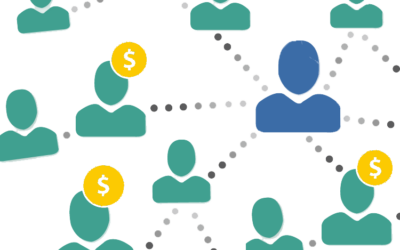
REFERRAL SYSTEMS: How Much Are Fundraisers Leaving on the Table?
Throughout my 35 years as a development professional, my best leads have always been referrals—particularly those accompanied by personal introductions. That shouldn’t be a surprise to any experienced fundraiser. What is surprising is that so few nonprofits do a good...

TOOLS OF THE TRADE: Five Lessons Learned on the Fine Art of Asking
I’m continuing this month with a few more thoughts about the chosen career of a professional fundraiser—a life of never-ending appeals for donations of time and money for worthy causes. With regard to the fine art of asking, below are some of my favorite “tools of...
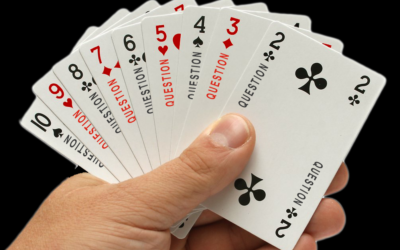
THE FINE ART OF ASKING: Developing Your Deck of Go-to Questions
After several years working as a professional fundraiser, it’s commonly assumed that countless face-to-face solicitations will have enabled fundraisers to overcome any reluctance about asking for money. If, in a moment of honest vulnerability, an aspiring young “rain...

IMPOSSIBLE SHOT: Impact of Unrealistic Fundraising Targets Passed Down from Above
I have a lot of conversations with nonprofit professionals at all levels—from foundation presidents to major gift officers to fundraisers in their first development jobs. Among the most frequent stress points I hear almost every business day are fundraising goals...

INDUSTRY ICONS: A Conversation with Jodi Davis on Donor Relations
Recently, I had a remarkable conversation with Jodi Davis, Chief Philanthropy Officer for Sutter Health in Sacramento, CA. Jodi is a brilliant, innovative leader who’s not afraid to step back and make honest evaluations about what is working and what could work...

THE PHILANTHROPIC APPROACH: What Nonprofits Accomplish that Government Funding Never Can
Last month’s article was about donors’ decisions to invest their social capital (contributions to community and society) by means of estate gifts to charity rather than the government in the form of taxes. It’s not that all government-funded programs are hopelessly...

SOCIAL CAPITAL: Investing in Federal Programs or Self-directed Philanthropy?
After meeting with thousands of selected donors over the last 40 years and listening carefully to their desires and concerns for the succeeding generation, I pose three basic questions. These three basic questions have led to a significant philanthropic impact. In the...

STRATEGIC PHILANTHROPY: Thinking Big in Light of Biden’s Proposed Tax Plan
Last month’s post about the Biden Tax Plan painted a bleak picture for fundraisers and nonprofit leaders. While there are certain to be numerous negative tax implications for the wealthy under the Biden Administration (see The Biden Tax Plan), the other side of the...

THE BIDEN TAX PLAN: Nonprofits That Are Best Prepared to Succeed
There has always been a balance between government’s responsibility to provide a safety net and the mandatory redistribution of personal and corporate wealth by means of taxation. On the one hand, no one wants to return to the harsh and heartless days of Victorian...

PERFORMANCE METRICS: Navigating the Murky Waters of Fundraising ROI
As we venture into 2021, I feel compelled to add a few comments about nonprofit plans and policies going forward. Specifically, I’m doubling down on my suggestion to establish consistent metrics, without which it’s impossible to tell how well or how poorly our...

FUNDRAISER FATIGUE: Maintaining Romanticized Optimism About Your Profession
In my many discussions with fundraisers over the last nine months, one of the most frequent comments has been: “We’re so weary of talking about the Covid-19 pandemic and its ongoing impact on charitable giving.” That underlying anxiety (spoken or not) is magnified not...

STRATEGIC PLANNING FOR 2021 (Part 3): Fundraising for Your First Quarter
Over the last six months of 2020, many of our Thompson & Associates discussions in our “Conversations with Industry Icons” podcast series have revolved around one primary topic: the strategies and objectives for 2021. In response, I’m revisiting the underlying...

STRATEGIC PLANNING FOR 2021 (Part 2): Defining a Successful Donor Visit
My conversations with nonprofit leaders over the last few months have focused on where to go from here and the strategic planning process for 2021. With that in mind, I’ve decided to revisit the essential elements of a long-term fund-development strategy. As I wrote...

STRATEGIC PLANNING FOR 2021 (Part 1): Five Big Ideas About Fundraising
In my recent conversations with Thompson & Associates clients, we’ve all agreed that between now and the end of the year, organizations need to begin thinking through their approach to fundraising for 2021 and beyond. Given the current challenges facing nonprofit...

OVER-RELIANCE ON ELECTRONIC COMMUNICATIONS: What It Can and Cannot Accomplish
Over the last months, the COVID-19 pandemic has created an unprecedented increase in electronic communications with staff and stakeholders. That has in many ways been a lifesaver for nonprofits. Imagine how difficult it would be to stay in touch without Zoom or...

THE WOODCUTTER’S WISDOM: Reserving Judgment About Nonprofit Futures
In my discussion with nonprofit leaders over the last few weeks, there’s a persistent anxiety about the future—and for good reasons. They’re having to deal with staff reductions and furloughs in fund-development departments, the inability to visit donors, and...

OPTIMISM: The Essential Ingredient in Desperate Times
Over the last few weeks, I’ve presented a dozen or more webinars for our clients and other organizations on fundraising in a pandemic. Make-A-Wish Foundation, Adventist West, and Texas Community College Foundations were among the participating organizations the last...

FUNDRAISING OBJECTIVES IN A PANDEMIC: Great Challenges and Great Opportunities
Several months ago, I posted two articles; the first listed five strategies that would prepare nonprofits for difficult times—how to harden your organizations against storms that will eventually come your way. The topic of the second article was what to do when the...
EFFECTIVE DONOR COMMUNICATIONS: How Warren Buffet Makes Less Become More
Written communications in the form of newsletters, emails, or social media posts have become standard practice for all nonprofits. The assumption that seems to drive some organizations is that if some is good, then the more the better. There is, however, a diminishing...

IN THIS TOGETHER: Creating a Sense of “We-ness” Among Donors
Persuasion researchers note that people are highly motivated to favor individuals when convinced that those persons are truly for or with them—not merely like them. The same thing is true for organizations, and as a consequence, nonprofits typically refer to donors as...

IN HONOR OF: The Best Predictors for Memorial Gifts
Recently, I scheduled a conversation with Dr. Russell N. James III for our podcast series on Conversations with Industry Icons. Russell is Professor & Director of Graduate Studies in Charitable Financial Planning at Texas Tech University, a diligent researcher and...
THE FLYWHEEL EFFECT: Organizational Branding at St. Jude Children’s Research Hospital
Over the last few months I’ve posted several articles on Jim Collins’ follow-up supplement to his best-seller—the 35-page booklet entitled Good to Great and the Social Sectors. Collins introduces the fifth Good-to-Great principle for nonprofits with this proposition:...

FORWARD-THINKING PHILANTHROPY: Focusing on Outputs Over Inputs
The third article in this series is about leadership decision-making based on outputs (results) over inputs (investments)—and particularly the measurable results of ongoing investments in fundraising.

IN THE MIDST OF A STORM: How Nonprofits Can Survive and Excel in Hard Times
My previous post, “Weathering the Storms,” covered practice-management strategies to employ during good times that tend to harden nonprofits against three types of hard times: 1) economic recessions that universally impact all donors and their giving capacities; 2)...

WEATHERING THE STORMS: Practice-management Strategies That Ready Your Organization
Hard times at nonprofit institutions generally come in three forms: 1) Economic recessions universally impact all donors and their giving capacity, as well as their “giving confidence.” In the years between 1854 and 2009, there were 33 economic cycles, averaging...

LEVEL 5 LEADERSHIP: Getting Things Done Within a Diffused Power Structure
This is the second in a series of several posts on Jim Collins’s booklet entitled, Good to Great and the Social Sectors. In this 35-page supplement to his bestseller, Good to Great, the author identifies and comments on five challenges that are unique to nonprofits...

GETTING THE RIGHT PEOPLE ON THE BUS: The Neurotically Obsessed with Excellence
In 2007, six years after publishing Good to Great, Jim Collins wrote a 35-page booklet applying the principles to the nonprofit world—Good to Great for the Social Sectors: Why Business Thinking Is Not the Answer. That follow-up seemed to be...

THE POWER OF PERSONAL SOLICITATION: A New York Murder, Faked Seizures, and Six-person Juries
I sat in a room yesterday with a group of development officers from a large and well-known international organization. This fantastic team makes an enormous impact on the lives of families in need. Since the majority of the funds they raise comes from special events,...

PENT UP GENEROSITY: Enabling the Felt-need to Give
I’ve met a lot of extraordinarily generous givers over the years. There was one couple, however, that I’ve never been able to forget—and, not because of the amount they gave. In terms of big-dollar philanthropy, this was not one of those seven- or eight-figure endowments.

FUNDRAISING SIMPLICITY: The Paralysis of Self-imposed Complexity
As I visit and have conversations with nonprofit leadership teams, I’ve noticed an increasing trend in organizational practices. We’re making fundraising excessively complicated. It’s true that fundraising can be difficult. However, a good advancement system is not...

THE BOARD MANAGEMENT COMMITTEE: Systems and Accountability at the Highest Level of a Nonprofit Organization
One of my favorite parts of my profession as a consultant is catching organizations doing things exceptionally well. The more difficult part is when I see organizations doing great work but struggling on many fronts. Below is a tale of two organizations whose...

UNINTENDED CONSEQUENCES: How Every Decision Affects Fundraising
Everything that happens in a nonprofit organization affects fundraising—everything. Of course, some things have a more direct and immediate impact than others, particularly decisions on programs, budgets, hiring, policy, administration, board recruitment, etc. Many of...

UNFORTUNATE FOCUS ON CASH: Donation Types as Predictors of Future Growth
Russell N. James III is Professor & Director of Graduate Studies in Charitable Financial Planning at Texas Tech University. He’s a great friend, and I’m one of his biggest fans. Dr. James is a diligent researcher with a nose for sniffing out the most relevant data...
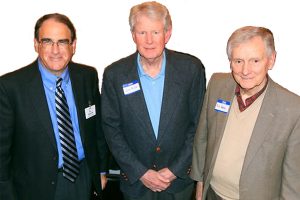
NEXT UP: A Rare Example of CEO Successions
Last month I wrote about the cost of turnover in organizational leadership, particularly at the senior executive level. The stories of nonprofit boards making poor decisions in the choice of the next CEO can be quite discouraging. In such cases, organizations often...
CHIEF EXECUTIVE TURNOVER: Intangible Rewards of Selecting the Right Candidate
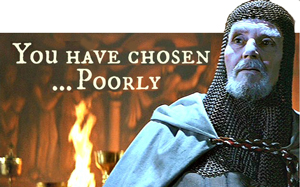
"You have chosen...poorly," said the knight guarding the Holy Grail. The famous line from the movie "Indiana Jones and the Raiders of the Lost Ark," was spoken as an intruder tried to select the of cup of Christ from over a dozen options. If he chose well, he would...
GIVING SIGNALS: Clearly Defining Successful and Unsuccessful Donor Visits
A negative feedback loop is commonly referred to as a “vicious cycle.” One bad thing leads to another, which leads to another. The downward cycle is particularly vicious because things trend downward with increasing frequency and increasing intensity. Most have had...

LEADERSHIP CHALLENGE: Senior Development Executive’s Role in Evaluating Donor Visits
As I’ve said before, what you measure and monitor tends to improve. The inverse is equally true; what you ignore or neglect tends to deteriorate. Nonprofit leaders are very good at tracking past performance—each donor’s giving history and each fundraiser’s...

THE LISTENING HABIT: The Donor’s Story and the Organizational Story
An associate of mine showed me a list of 100 slogans or taglines used by financial institutions along side their official name. Apparently, a great many companies are attempting to brand themselves as having a deeply embedded culture of listening. “The Listening Bank”...

THE PREPARATION HABIT: Making the Most of Your Donor Visits
In the next two or three blog posts, I’m returning to a familiar theme—visiting donors, cultivating relationships, and securing donations. Building long-term donor relations is an acquired skill that should be exercised and perfected over time. You can’t just wander...

PERPETUAL NAMING RIGHTS: Three Cautionary Tales and One Essential Piece of Advice
Two separate $100 million gifts to New York City’s Lincoln Center illustrate the naming rights dilemma that many nonprofit leaders face. The first mega-gift came in 2008 when billionaire David Koch (pronounced “coke”) donated $100 million, the largest single donation...

RULE OF RECIPROCITY: Exchanging the Currency of Philanthropy
There are social rules embedded in our culture that influence our decision-making processes and our interactions with others. One of the most powerful and sometimes almost irresistible is the rule of reciprocity. When we receive gifts, favors, invitations, or random...
GOOD TO GREAT: Maximizing Fundraising Performance and Donor-base Potential
Confronting brutal facts with unwavering faith, according to leadership consultant and best-selling author Jim Collins, is one of the characteristics of “10X companies” that were able to go from good to great. He elaborates: “Information ignored for the sake of...

WINNING TRADITIONS: Philosophy and Approach to Team Building
I interact with a lot of fundraising executives representing institutions of all sizes and degrees of success—from the largest hospital network in the North America to small shops with two or three fundraisers. It would be a mistake to assume that very large...
STRATEGIC PLAN FOR FUND DEVELOPMENT—PART ONE: From the Big Ideals to the Nitty-gritty Details
I frequently speak at nonprofit leadership conferences on various topics, including charitable estate planning, fund-development strategy, and best practices of the most successful institutions. Over the last two years, I've been asking organizational leaders...

“IDEAL” LEADERSHIP: Beginning with the End in Mind
In a previous blog I referred to two studies—Under Developed on the status of nonprofits in the U.S. and Beyond Fundraising: What Does It Mean to Build a Culture of Philanthropy? by Cynthia Gibson. Though most would agree with the bleak assessment described in the...

DONOR VISITS: Setting Up Those Relationship-Building Conversations
Imagine having a long list of major donors just waiting for the chance to spend a little time with you. They all want to tell you about themselves, hear about your cause, and hope to build a long-term relationship. You spend your days telling organizational stories,...

PLUGGING THE LEAKS: The True Impact of a 1% Increase in Your Donor Retention Rate
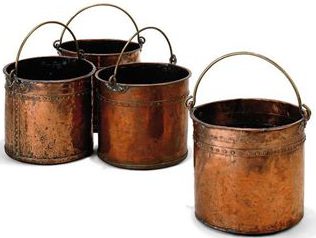
Trying to fill a bucket that leaked as quickly as you could pour water into it would be a frustrating way to spend your day—or your career. That’s how many fundraising professionals feel when all the gains they make in donor acquisition are lost in the next year to...
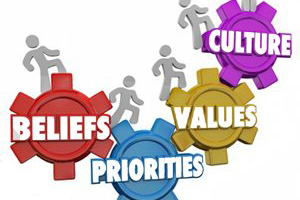
CULTURE OF PHILANTHROPY: What Nonprofit Leaders Can Learn from the Industry-leading Customer-service Company
The 2013 Walter & Evelyn Haas Fund sponsored a comprehensive review of nonprofits in North America. The consulting firm, CompassPoint, surveyed more than 2,700 CEOs and development directors. The report, published under the title Under Developed, gave voice to...

THE FAMILY STORY: Recognizing Our Opportunities for Legacy Gifts
Charles W. Collier was Senior Philanthropic Advisor for Harvard University, having served the institution of twenty-five years until his retirement in 2008 for health reasons. In his most notable book, Wealth in Families, Collier talks about three important...

TWO HURDLES: Overcoming Donors’ Greatest Anxieties with a Blended-gift Approach
Several years ago I posted a blog about the two big questions donors need to answer before pulling the trigger on a major gift, bequest, or planned gift. The first question regards what they would need to live on for the rest of their lives. Since most donors...

BEATING THE ODDS: Five Donor-Relations Strategies That Impact Bequest Fulfillments
In the previous blog I explained why the fulfillment rate of donor bequests was either good news or bad news, depending primarily on whether your organization has a progressive or regressive approach—that is, whether or not organizational leaders truly believe they...
NONPROFIT BATTING AVERAGE: Increasing Your Organization’s Bequest Retention Rate
Several years ago I worked on an estate plan for a gentleman with a fifty-plus million-dollar estate. His intention was to leave a sizable percentage to charity and much of it to a nonprofit he had once served as a board member. In the planning process, he notified...

THE FUTURE OF NONPROFIT NAVIGATION: Missing Data That Leads to Bad Decisions
As an instrument-rated pilot with hundreds of hours in the cockpit, I understand the importance of focusing on data on my dashboard, particularly in stormy weather or when the way ahead is uncertain. When an inexperienced pilot gets into trouble, it usually begins...
FOUR BUCKETS: Accounting Standards and Donor Recognitions for Revocable Gift Commitments
Sheryl and I have incorporated several charitable gifts into our estate plan. Like most donors making future gifts, we’ve had a lot of experience with those respective institutions and have invested a lot of thought and prayer into the planning process. We considered...

A GENERAL THEORY OF FUND-DEVELOPMENT: Five Decisions that Keep Your Organization on the Front Side of the Momentum Curve
Over the last few years I’ve posted a lot of articles on various aspects of the fund-development process. Some articles zoom in on one specific aspect of donor relations while others are more big-picture applications. In this article I’m going to step way back and...
GREAT CONVERSATIONS: The Foundation of Great Donor Relationships
In previous posts I’ve talked about the importance of regular and meaningful conversations with donors. All those thoughts are a result of the one sure thing I know—great donor conversations are the essential foundation of great donor relationships. Rarely does the...

RAMBAM’S LADDER – PART 2: Three More Takeaways for Modern-Day Fundraisers
Moses ben Maimon (“Rambam” for short), a 12th century rabbi, outlined eight types of alms giving and arranged them in kind or a “hierarchy of righteous giving” (see Part One). Julie Salamon writes for the culture section for the New York Times. Her book entitled...
RAMBAM’S LADDER: Twelfth Century Rabbi and Philosopher on the Ascending Ethics of Giving
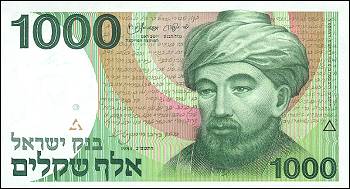
Rabbi Moses ben Maimon (1135-1204) is typically referred to by his Greek name, “Maimonides” or by the nickname “Rambam,” a collection of the syllables from his full name and title. Maimonides saw more than his share of tragedy and triumph. His mother died shortly...
THE SECOND QUESTION: Talking to Donors About Their Kids’ Inheritance
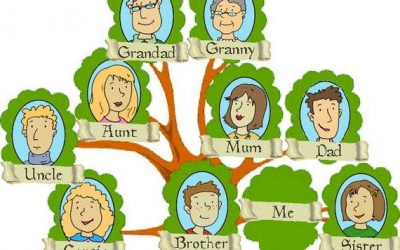
Several years ago I posted an article based on thousands of conversations with donors about planned gifts as a part of their overall estate plan. From Helping Donors Answer Their Most Perplexing Questions: “Anyone who has ever toyed with the idea of making a planned...

CAREER STRUGGLES: Pursuing Success but Getting Lost in the Process
I’ve had the privilege over the years of working with and for the finest group of professionals in any sector of the economy—the Thompson & Associates staff and representatives, our nonprofit clients, and the thousands of nonprofit professionals I’ve met in my...

FAITH-BASED PHILANTHROPY: Appealing to the Devout Affluent
Through the years, my observation has been that people of faith are extremely consistent and usually very generous givers. Of course, believers don’t have an exclusive corner on compassion or philanthropy. I’ve worked on estate plans for organizational donors who, in...
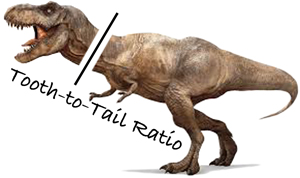
NONPROFIT OVERHEAD: Making the Case for a Sustaining Tooth-to-Tail Ratio
Tooth-to-Tail Ratio (T3R) is a military term used to measure the strategic efficiency of a fighting force. T3R is the ratio of combat forces (the teeth) to the number of support personnel (the tail) required to place one trained, supplied, and strategically-integrated...

FUNDRAISERS AS MATCHMAKERS: Getting Donors to Fall in Love with Your Organization
Fundraisers are a lot like professional matchmakers. They regularly introduce eligible people to their organizations, point out all the most admirable qualities, and hope those potential donors will fall in love and begin lifelong relationships. If they can win hearts...
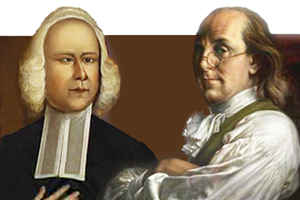
FRANKLIN AND WHITEFIELD: The Immovable Donor Meets the Irresistible Fundraiser
In a previous post I wrote about Benjamin Franklin’s 200-year endowments to the cities of Philadelphia and Boston. His testamentary gift was made for the express purpose of helping young men establish themselves by funding apprenticeships. Like so many planned gifts,...

CLOSING ON MAJOR GIFTS: Classic Sales Training Techniques Applied (or not) to Nonprofit Solicitations
Very few set out with the career goal of becoming fundraisers. Historically, nonprofit executives (including fundraisers) emerged from the ranks of financial professionals, business leaders, academic faculty, or the nonprofit’s most experienced program staff. In the...
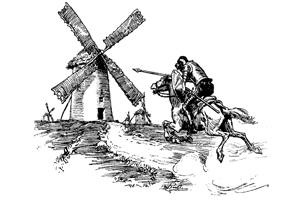
NOBLE OCCUPATION: A Little Bit of Don Quixote in All the Best Fundraisers
The Ingenious Gentleman Don Quixote of La Mancha by Miguel de Cervantes Saavedra was published in 1606. The Spanish classic follows the adventures of a nobleman who (under the assumed name, Don Quixote) set out to revive chivalry, bring justice to the oppressed, and...

SOLICITING MEMORIALS: Understanding the Need to Give in the Wake of Tragedy
Sheryl and I lost our only grandchild ten years ago this month. As they so often say, “You can eventually get beyond that kind of tragedy, but you never really get over it.” Even as I write this story, the sense of loss is still very real. On the morning of April 2,...

ACCOUNTABILITY ATTITUDES: Why You Can’t Fool Experienced Donors
Creating a positive culture of accountability is not something accomplished by decree, i.e., the values we “decided” to adopt at a recent strategic planning meeting. Cultural values develop through time, particularly over difficult times. Leaders who stick to their...

ACCOUNTABILITY CULTURES: Toxic vs. Empowering Systems and the Effect on Fundraising Staff
I used to keep a file in my desk drawer on the positive and negative lessons I learned from leaders—some great, others less than great. Eventually, the file was misplaced but many of the ideas were sticky enough to remain with me through the years. Below are a few of...

THE CASE FOR ACCOUNTABILITY: Why I Love It and Would Feel Lost Without It
As unusual as it sounds to say, I love personal accountability. Consequently, I’m committed to a process of carefully tracking and analyzing where I’ve invested my time, talent, and resources. Without that process, I’d feel a bit lost. In fact, the more accountable I...

PARADIGM SHIFTS: Inspiring Philanthropic Awakenings Among the Already-Generous
In 2006 Warren Buffet made his Philanthropic Pledge, the decision to leave 99% of his wealth to charity during his lifetime or at his death. Bill and Melinda Gates have made a similar commitment (95% to charity). Together with Buffet, the Gateses are challenging their...
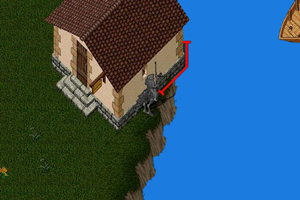
CREATING MARGIN: First Step Toward a Systematic Cultivation of Planned Giving Opportunities
There’s an irrefutable law of nonprofit leadership: Consistent growth and long-term sustainability are largely dependent on an organization’s ability to monitor and maintain a healthy balance between 1) solicitation of gifts from discretionary income and 2)...

OBSTACLES & DISINCENTIVES: Reasons for the Gap between Future Gift Potential and Future Gifts Secured
Recently, the CEO of a hospital commented quite matter-of-factly, "At this point in my career, I’m not concerned about future gifts. I've got four more years before I retire, so I'm only worried about raising cash." Raising cash is a good thing and so is understanding...
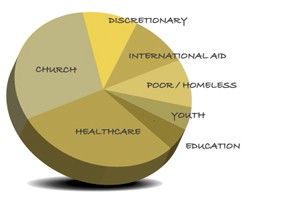
PHILANTHROPIC PORTFOLIOS: Conservative and Aggressive Charitable Giving Tendencies
Over the last decade there’s been a lot of emphasis on quantifying and measuring the results of charitable gifts. More and more donors view gifts to a nonprofit as social investments and evaluate their giving decisions in terms of the ROI (return on investment)....
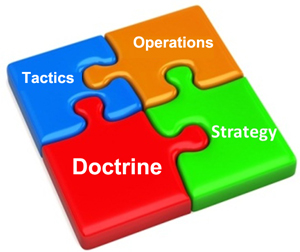
STRATEGIC PLANNING — Part 3: Donor Doctrine as the Starting Point
A couple of years ago I published two articles on strategic and tactical planning and continue to be surprised at how those posts from 2012 continue to show up on the list of top reads. So here’s one more thought about the strategy-tactic idea and how it relates to...

ORGANIZATIONAL MOMENTUM: Why Fundraising Is Hard for Some and Easy for Others
One of the best ways to evaluate the efficiency and effectiveness of a nonprofit is in terms of its net momentum. And, there’s no better way to illustrate that principle than with a drag racer — specifically the 1962 metallic blue Chevy Impala Super Sport that I...
PROCESS AND PROFILE: Success Essentials for Nonprofit-Sponsored Charitable Estate Planning
When it comes to planned gifts and bequests to your organization, a standard consultant’s reply is that organizations “have not because they ask not.” However, it’s usually not quite that simple. If success were based simply on the number of asks, then success would...

CASE FOR ENDOWMENTS: The Long and Short of Fundraising
Last year I wrote an article about a gathering of concerned university presidents in the early 1980s (See: “SOMETHING TO TALK ABOUT”). I attended as a Vanderbilt University graduate assistant at working in the education department and trying to come up with an idea...
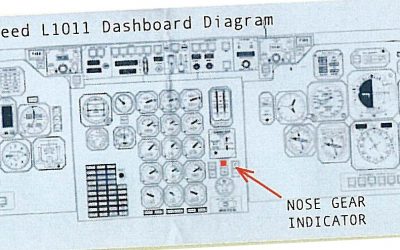
WHAT’S ON YOUR DASHBOARD? Identifying Your Key Performance Indicators
The 1972 crash of Eastern Airlines Flight 401 is the classic example of Controlled Flight into Terrain (CFIT), an aviation term used to describe a perfectly air-worthy aircraft under complete pilot control being inadvertently flown into the ground or an obstacle. When...

STRATEGIC MOMENTUM: John Harvard and a Series of Unfortunate Events
I wrote a paper in graduate school on the Harvard legacy and have been intrigued with the idea of it ever since. It’s a great example of several key elements of strategic giving—leverage, timing, and momentum. In other words, the greatest philanthropic impact is the...
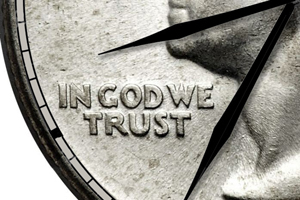
CULTIVATION STRATEGY: Fundraising for Your First Quarter
What you as a nonprofit executive do in December and January each year is a “tell”—that is, it reveals a lot about your (or your institution’s) fund-development mentality. Are you a year-end closer or a springtime cultivator? Most nonprofits spend enormous an amount...
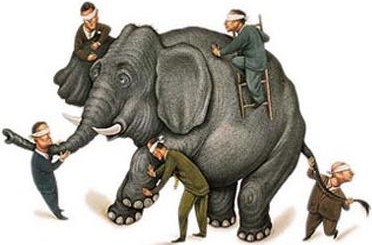
SIX BLIND MEN & THE ORGANIZATIONAL ELEPHANT: Microscopic and Telescopic Versions of the Fundraising Narrative
The story of the elephant and the six blind men has been told in one form or another since the early fifth century B.C. and has been used to illustrate everything from religious toleration to team synergy. Here’s my application to donor relations and organizational...
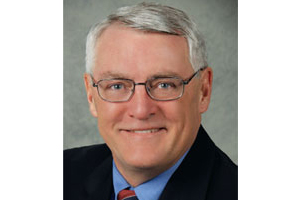
CRESCENDO INTERACTIVE, INC.— A Conversation with Charles Schultz
Charles Schultz and I go back a long way. I remember my first training event with Charles, Artie, and Carol in a very small room in Camarillo, CA. Many years have passed, but I remember being impressed with Charles and his vision for planned giving software. He had...
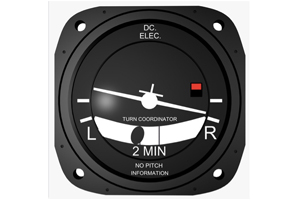
THE EFFECTIVE ASK: Sticking to a Script or Flying by the Seat of Your Pants
I love to fly, and I love relating to donors. Consequently, I can’t help but think about the two in the same context. Fundraising is a lot like piloting my Cirrus SR22 Turbo, and flying my Cirrus is a lot like fundraising. There is an aspect of every conversation with...

THE MEANING OF “NO” — Is It Really the Worst Thing a Donor Can Say?
There’s a correlation between the depth of relationship with a donor and the size of an appropriate appeal. When a fundraiser makes an appeal that a donor could not, or would not, seriously consider, the lack of understanding and the lack of relationship becomes a...

PERSUASION THEORY; Two Pathways to a Giving Decision
Two donor appointments early on in my career showed me then (and remind me now) how donor relations is a never-ending learning experience. With both experiences, I made some very wrong assumptions about what those two donors wanted and needed to hear. In retrospect,...
FIVE IMPORTANT LESSONS; From the Greatest Fundraiser I’ve Ever Known
I have spent my whole career working as a fundraiser. I never really thought about doing anything else, and my dad is the one responsible for that. In fact, every lesson about giving that really matters, I learned from him. It’s kind of a bittersweet story. By the...

AN ESTATE OF PHILANTHROPY: Creating a Multi-Generational Legacy of Giving
In a previous blog I wrote about a process to help donors work their way through their three big gift planning questions: how much will they need for the remainder of their lives; how much should they give to their children; and, how much should they give to...
INSTITUTIONAL SUSTAINABILITY: Transitioning from “Hunter Gatherer” to a Cultivation-Based Fund Development Strategy
The following article appeared in the Spring 2013 issue of Healthcare Philanthropy Journal, a publication of the Association of Healthcare Professional (AHP). It was based on a June 2011 article posted on this blog site. The full length article is expanded to include...

ESTATE PLANNING FOLLIES: Disappointing Results of Setting Up Family Foundations to Teach Children Philanthropy
I talk with hundreds of families each year about generous giving and wise estate planning. I can’t tell you how many times affluent parents or grandparents have said to me, “We want to set up a family foundation.” Notwithstanding the worthy causes listed in the...

PHILANTHROPIC AWAKENINGS: Mentoring Donors in the Art of Philanthropy
It thrills and amazes me to witness individuals go through transformations with regard to their giving. Those transformations don’t happen that often, or that easily. Some might say (paraphrasing the Gospel of Mark), “It’s easier for a camel to go through the eye of a...

THE ART OF THE TELL; Identifying the Heroes in Your Organization’s Story
No matter how masterful you are with facts and figures about your organization’s effectiveness, to move people to make institutional changing contributions you have to become a masterful storyteller. The right story to the right donor can make the difference between a...

A FINAL THOUGHT: What Those Last Letters to Loved Ones Can Mean
Each estate planning professional at our company, Thompson & Associates, walks clients through a process that helps them clarify their thinking on several important issues: what they would still like to accomplish in their lifetime, the values that have guided...

THE POWER OF STORY: Using Historical Narrative As a Compelling Case for Your Mission
I was put into a situation early in my fundraising career that became an unforgettable example of the power of a story to influence people and move them to action. As a development representative for David Lipscomb University, the Vice President assigned me the...

SIX LEADERSHIP IMPERATIVES; Characteristics of the Most Successful Organizations (Part 2)
In the last article I began describing the twelve characteristics of the most successful nonprofit organizations, which was based on my dissertation research at Vanderbilt University. The first six characteristics related to personal communications and the depth of...

SOMETHING TO TALK ABOUT: Six Conversations that You Need to Have with Major Donors
As a student at Vanderbilt University over thirty years ago, I served as a graduate assistant to the Department of Educational Leadership. Vanderbilt was hosting a meeting of university presidents to discuss funding issues. In the late 1970s, and early 1980s, our...

GREAT BY CHOICE: Twenty-mile Marching for Nonprofits
This is part two of my review of the book by Jim Collins and Morten Hansen — Great by Choice: Uncertainty, Chaos, and Luck — Why Some Thrive Despite Them All (See part one: Donor Pinging). My objective is to suggest a few ways the principles in Great by Choice can be...

MASLOV & THE NEED TO GIVE: What Fundraisers Should Know about the Mechanics of Generosity Among the Wealthy
I’ve spent thirty years meeting with donors from each non-profit institution I serve as a charitable estate planning consultant. Setting up estate plans that contain advanced structures and procedures is the easy part — almost incidental to the process. The most...

DONOR PINGING: Firing Bullets Before Cannon Balls
In their recent book, Great by Choice, Jim Collins and Morten Hansen published the results of a nine-year research project in which they identified three characteristics of what they called “10X leaders.” These were CEOs who led their companies to achieve ten times...
OPTIMISM: Ben Franklin and the 200-Year Endowments
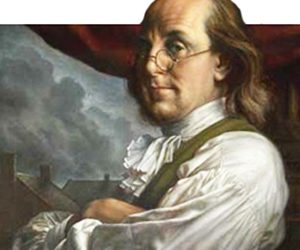
In 1785 a French mathematician named Charles Joseph Mathon de la Cour wrote a parody of Benjamin Franklin’s Poor Richard’s Almanac in which he mocked the unbearable spirit of American optimism represented by Franklin. The Frenchman fictionalized about “Fortunate...

VISIONARY LEADERSHIP: Asking the 100-Year Questions
Overused concepts lose their significance over time. The word “hero” is applied equally to extraordinary acts of courage as well as to casual attempts at civilized behavior. The same is true for words like service, sacrifice, and generosity. One particularly worn out...
Identification Pyramid: From Friends to Followers to Raving Fans
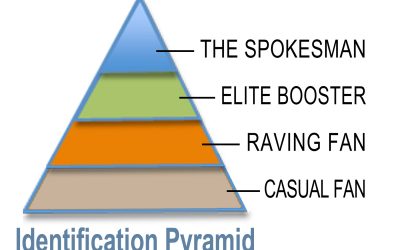
Fundraising executives spend a lot of time looking at pyramids. These planning charts help us prioritize our fundraising goals and keep us focused on the relationships that matter most to the organization. All pyramids have strata — levels that categorize people in...

Defining Success: The Starting Point in Charitable Estate Planning
One of the most rewarding projects with which I have been involved had a surprise ending. A hospital foundation had contracted me to introduce charitable estate planning possibilities to a select group of donors. As is our standard approach, the hospital set up the...

Strategic and Tactical Giving – Part 2: Hans Brinker with His Finger in the Dike
NOTE: While Strategic and Tactical Giving – Part 1 defines and contrasts the different two approaches to planning, this article (Part 2) defines and contrasts the two types of gifts — i.e. strategic and tactical gifts. In the novel, The Silver Skates by Mary Mapes...
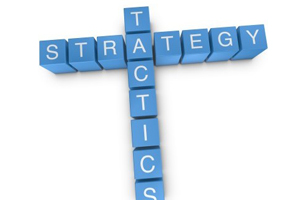
STRATEGIC AND TACTICAL PLANNING — PART 1: The Fundraising Approach
The language of classic planning and decision-making can be a bit confusing. What is, after all, the real difference between strategic, tactical, and operational planning? How does institutional doctrine differ from institutional policy? Most importantly, how can...

Two Kinds of Materialism; Strategic Acquirers Hiding in our Midst
I first got to know Mary at a college I attended. I was a graduate student, and she was the registrar and gatekeeper to all things regarding my fees and class schedule. Mary seemed to be a nice enough person — neatly dressed, very proper, but...

If Truth Be Told; Two Relationship Questions Every Major Donor Wants to Ask
As professional fundraisers, we will spend a large portion of our lives managing relationships between donors and non-profit organizations. That sounds like such a simple thing to do. But as you know, both ends of that relationship at times can be complex and...

Fundraising and the Art of Listening; Discovering Unspoken Concerns that Hinder Giving Decisions
As part-owner in a company that recruits fundraising executives, I have had a lot of conversations with organizations and foundation leaders about “the ideal candidate.” Some of the typical skill-set requirements used to filter through applicants are: They must have a...
Understanding and Upgrading Habitual Donors
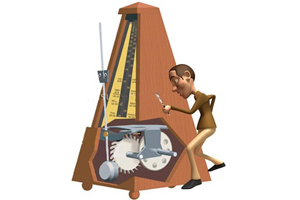
Three fourths of all donors give by habit, some with the rhythm and regularity of piano teacher’s metronome. Tick, tock, tick, tock — same time, same amount, same method, same organizations. Other equally habitual donors manage their giving with a systematic approach...

Wealth and Hyper-Agency: Why Strategic Philanthropists Grow Frustrated and Bored with Organizations and Their Leaders
Each year for many years I have hosted a dinner with estate planning clients who have either made a gift of over $1,000,000 or had executed an estate plan, which include a gift of that size or larger. Since I want them to feel free to discuss with other donors their...

Giving Donors a Genuine Sense of Partnership
Many non-profit organizations are very strict about their terminologies. Some of them never make reference to donors, contributors, or supporters. “Partners” is the only term allowed. It’s a good communications policy because it is the relationship concept they are...

The Case for Organization Sponsored Charitable Estate Planning: Top Ten Hesitations
The long-term sustainability of non-profit organizations at their current levels is going to largely depend on their ability to secure planned or testamentary gifts from donors’ accumulated net worth. We’ve known this for some time because of the increasing average...

Primary Donor Motivation: The Subtle Difference Between “Giving With” and “Giving Because”
There are scores of giving methods, each one addressing a particular need of the organization and/or the donor — gifts to annual funds, capital campaigns, program initiatives; gifts from income, assets, or advised funds; gifts of cash, property, or time. There are a...
Essential Upgrades: Understanding Dynamic and Static Donor Relationships
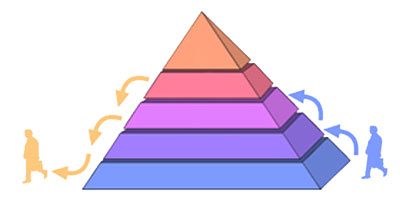
No one works in a non-profit development office very long before being confronted with the pyramid. First-time or occasional gifts at the bottom, regular gifts to the annual fund up a little higher, then major gifts, and finally estate gifts on top. The labels vary...

MANAGING DEVELOPMENT: Getting the System Right
I started my career in non-profit development at the bottom, determined to do whatever it took to work my way up. The organization gracious enough to give me a shot located their development office in a large old house. And since I was the new guy, my workspace was in...
Planned Giving or Charitable Estate Planning: What’s the Difference?
It has been many years since my first tenure as the Director of Planned Giving. The goal then (as it generally is today) was to go out, promote the organization, present planned gifting possibilities, and secure the gift. Since we assumed that long-time donors already...

Helping Donors Answer Their Most Perplexing Questions
Anyone who has ever toyed with the idea of making a planned or testamentary gift to charity knows that before any significant giving decision could be made, he/she had answer two very important questions: 1) How much will my spouse and I need to live on for the rest...
The Five Big “Don’t-s” As a Member of a Donor’s Estate Planning Team
One of my greatest honors as a charitable estate planning representative has been the occasional invitation to be a part of a donor’s estate planning team. Awards and plaques are nice, but that invitation signifies an unprecedented level of trust in your professional...

The Greatest Fundraiser of All
Lucky for me, the most important lesson I’ve learned in my thirty years of fundraising and charitable estate planning came near the very beginning. And through all these years, that lesson has never left me. I have come to believe no other concept has a greater impact...



Copyright 2024 Thompson & Associates. All rights reserved. Privacy Policy & Disclaimer